

Custom Lightweight Spirits Glass Bottles | 2026 Packaging Trends
Date: October 20, 2026
Discover our collection of ready-to-go glass bottles, crafted for a perfect fit
 10:52
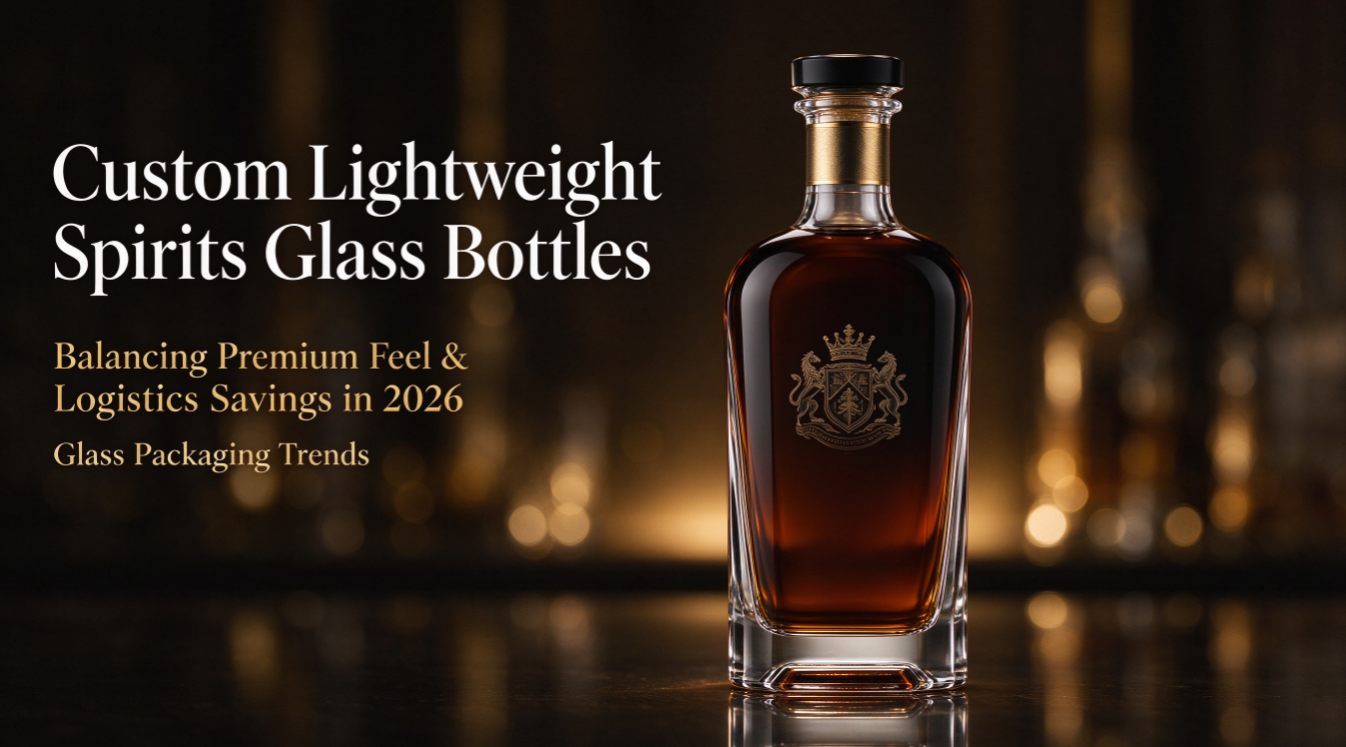
Custom lightweight spirits glass bottles have quickly become one of the most practical packaging innovations for distilleries in 2026. Many premium spirits brands face a shared dilemma: consumers still expect the solid, substantial touch of a luxury glass bottle, yet rising ocean freight costs and carbon reporting rules push teams to cut excess weight from packaging. Custom lightweight spirits glass bottles are emerging as a practical solution that bridges brand perception, supply chain budget and sustainability targets.
Lightweighting is not simply making thinner glass. Modern factories use NNPB forming technology to redistribute molten glass evenly across bottle walls. Reinforcement is placed on high-risk zones including the bottle heel, shoulder and neck thread, while non-critical body areas reduce unnecessary glass mass. For a standard 700ml spirits bottle, well-executed lightweight design can cut total weight by 20–30% without increasing breakage risk during bottling and transit.
This matters greatly for distilleries scaling export orders to Europe, Australia and North America. Less bottle weight directly lowers container loading weight, reduces per-unit logistics expense and helps brands meet Scope 3 emission reporting requirements under regional packaging regulations such as the EU PPWR rules (Drinks by Kingpin, 2026).
A common misunderstanding among distillery buyers is that sculptural, uniquely shaped custom bottles must always be heavy. Experienced glass manufacturers can run lightweight simulations at the design stage, adjusting curvature and wall distribution before new mould cutting begins. Even complex, artistic bottle silhouettes can be converted into custom lightweight spirits glass bottles with careful engineering review.
At Hour To Glass, our engineering team works with tequila, whisky and gin brands early in the packaging development cycle. We review 3D designs and technical drawings to propose weight optimisation changes that preserve the brand’s signature silhouette. This service fits both standard MOQ production and flexible custom mould projects for growing spirits labels.
Mid-sized distilleries that ship bulk volumes overseas see the clearest ROI. For brands running regular CIF shipments, reduced bottle weight accumulates into meaningful freight savings across every container load. Meanwhile, the premium visual and hand feel remains intact, so shelf appeal in liquor retail stores is not compromised.
Small-batch craft producers can also explore lightweight options when planning their next bottle refresh. Early design collaboration helps avoid costly rework after mould fabrication. Working with a glass supplier that understands both custom mould creation and lightweight constraints is critical for smooth project delivery.
The industry direction is clear: lightweight luxury will continue to replace over-engineered heavy glass for most mainstream premium spirits SKUs. Winning suppliers will combine mould-making skill, consistent QC and transparent logistics planning, rather than only offering standard off-the-shelf bottle shapes. More distilleries will request custom lightweight spirits glass bottles as freight and carbon rules keep tightening globally.
If your distillery is reviewing new bottle packaging projects this year and wants to explore lightweight custom glass design, contact the team at Hour To Glass to discuss your technical requirements and sampling timeline.
We will reply you within 24 hours. If for urgent case, please add WhatsApp/WeChat: +86 13206376935,. Or call +86 13206376935 directly.
*We respect your confidentiality and all information are protected.
We will only use your information to respond to your inquiry and will never send unsolicited emails or promotional messages.